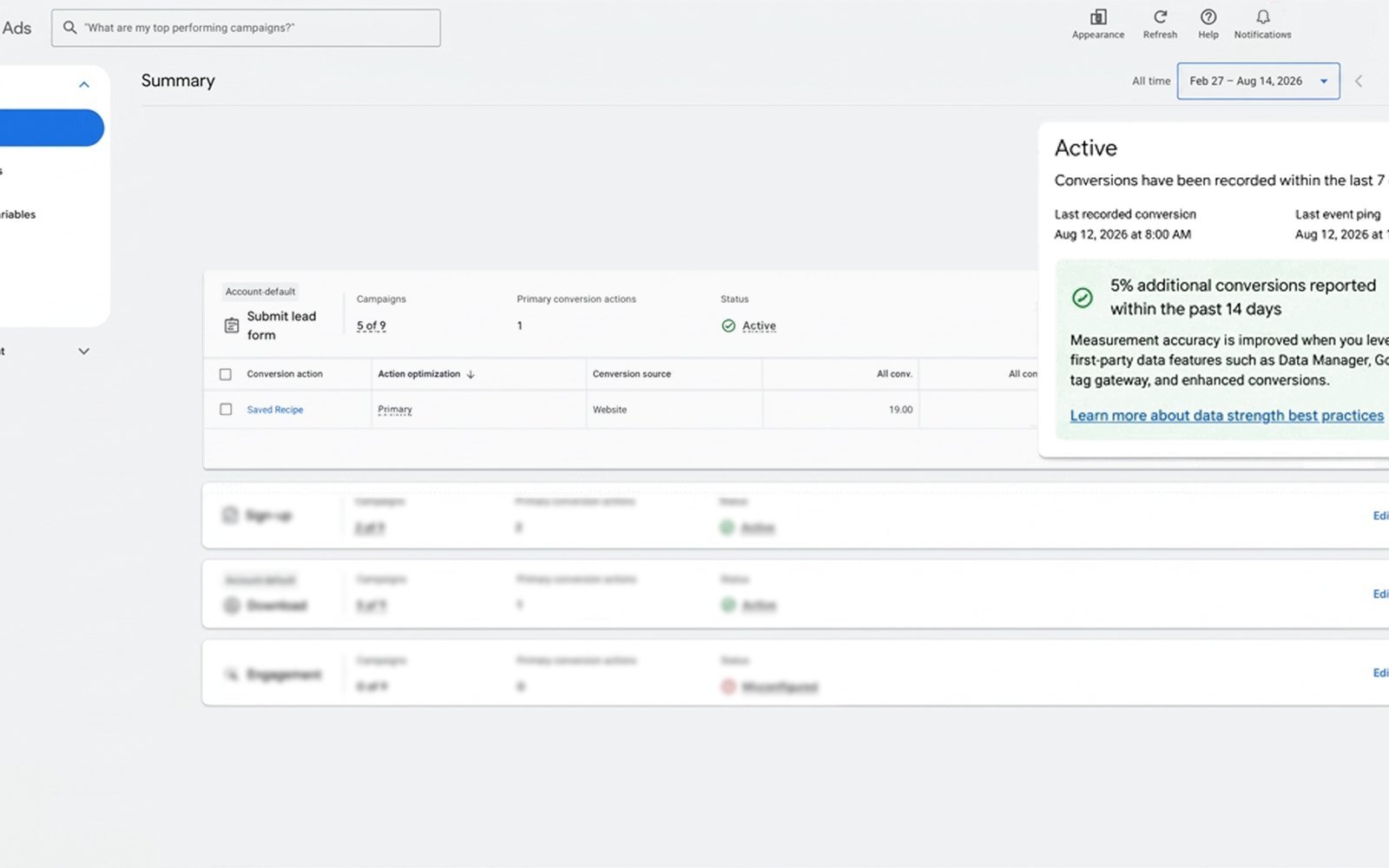
Ahead of the Q4 rush, Google is expanding its first-party data tooling: Data Manager is being integrated into Google Analytics and Display & Video 360, its API is adopting IAB Tech Lab's Event and Conversions API (ECAPI) standard, and Google Ads is getting a new Data Strength Uplift metric.
Key facts
- When: Rolling out now, timed before the Q4 holiday season
- Who it affects: Advertisers running Google Ads with offline, app or CRM data. Small stores with no first-party data to connect see limited impact
- What to do: Confirm enhanced conversions and Google tag gateway are configured, then use the new metric to quantify what you already connected
What happened
Data Manager, the central place to connect first-party sources such as CRM, offline and app data, is moving into Google Analytics and DV360, and enhanced conversions are expanding into both products as well. The Data Manager API is adopting ECAPI, IAB Tech Lab's common standard for sending conversion and event data, so teams working across several ad platforms can use one specification instead of building platform-specific pipelines. Google is also adding built-in diagnostics that flag data problems before they affect campaign performance. The new Data Strength Uplift metric in Google Ads estimates how many additional conversions an advertiser recovers through its first-party data setup. Google cites two averages: advertisers connecting offline and app data through Data Manager see a 26% average increase in incremental ROAS, and advertisers improving data strength via Google tag gateway see a 14% average conversion uplift.

What it means for independent store owners
This is built for advertisers with several data sources to wire up, and not every seller needs to follow. The test is simple: do you have conversions Google currently cannot measure? If every order completes on your site and GA4 plus conversion tracking are already in place, there is little for first-party data to recover, and the new metric will most likely hand you a small number that doesn't matter. Three groups it genuinely applies to: stores with physical locations or phone orders, stores with an app, and subscription or high-ticket businesses where the sale lands after several touches. Those measurement gaps are real, and connecting offline data and enhanced conversions improves the inputs smart bidding runs on. Treat the 26% and 14% as Google's own averages, not a promise — your gain depends on how much you were missing, so the worse your prior setup, the bigger the lift looks. ECAPI is a two-year story for small sellers: once conversion upload becomes a cross-platform standard, switching or running multiple ad platforms gets cheaper to wire, but nothing needs doing about it today. The one thing worth half an hour before peak season is checking inside Google Ads that enhanced conversions are on and tag gateway is set up correctly, because that's the precondition for the new metric to report anything positive at all.


