On Oct. 15, Google launched Universal Cart in the US across Search (including AI Mode) and the Gemini app. It is built on Google's Universal Commerce Protocol (UCP) and lets shoppers save items from different merchants in one place.
Key facts
- Effective: Live in the US from Oct. 15, 2026
- Who is affected: Independent stores selling to US shoppers that rely on Google Search and Shopping traffic
- Act now?: Audit your Merchant Center feed and UCP readiness; no need to rebuild checkout yet
What happened
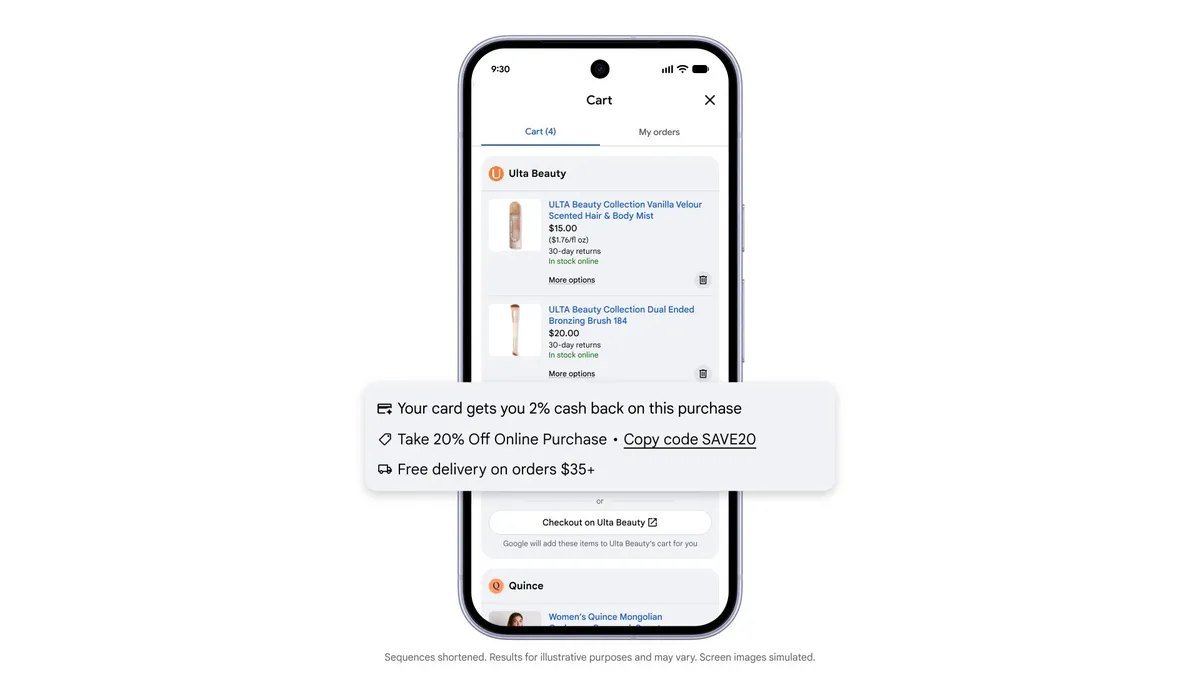
Universal Cart keeps products from multiple retailers across sessions. Using the Shopping Graph (over 60 billion product listings), it sends price-drop and back-in-stock alerts, and through Google Wallet it surfaces card perks and promo codes. Checkout works two ways: pay with Google Pay inside the cart for some merchants, or move items to the merchant's own cart and finish on the store's site. Google named Nike, Sephora, Target, Walmart, Wayfair and many Shopify merchants. Merchants stay the seller of record and handle order confirmations and support.
What this means for independent store owners
Google is pulling more of discovery, comparison and add-to-cart into its own surface. For store owners that matters in three ways. First, shoppers can save your product without visiting your site, so accurate price, stock and promo data now decide whether you get saved and whether alerts fire; feed quality matters more. Second, if a buyer checks out inside the cart you lose on-site behavior data, so attribution and retargeting get thinner, while the hand-off path stays close to today. Third, fulfillment and customer service remain yours. What we don't know: how a store opts into in-cart checkout, and when this reaches outside the US. Watch Merchant Center for new settings. For now, keep feed price and inventory in sync, watch Google-sourced conversion paths in GA4, and leave your checkout alone.