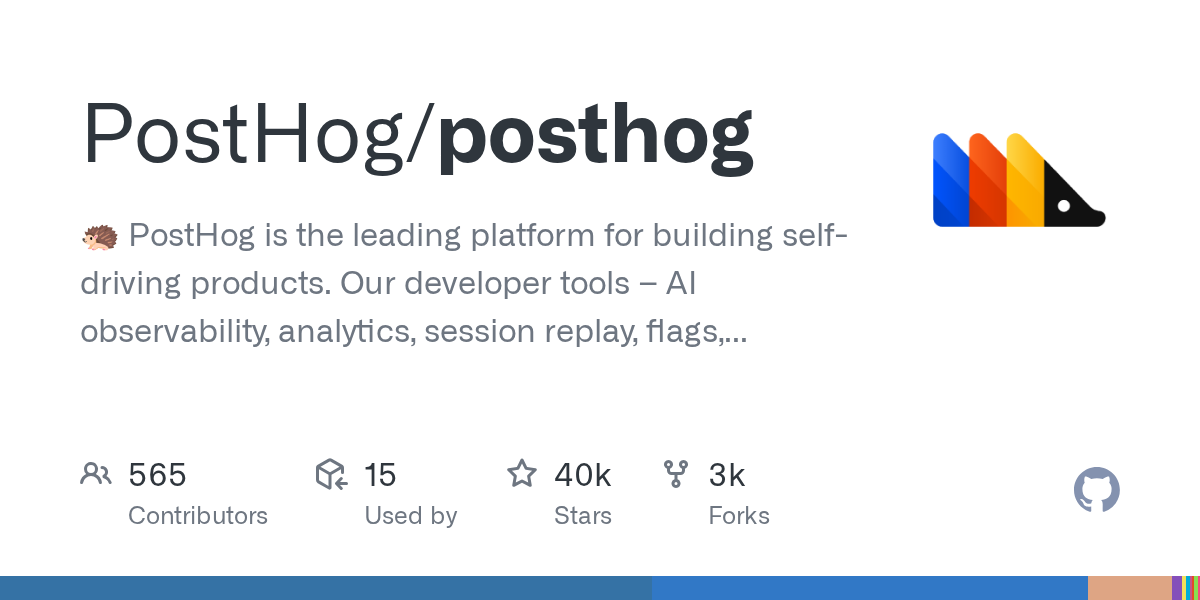
Upfront: I did not build this. It is an open-source project on GitHub (PostHog/posthog, MIT / 商业双授权). It is listed here on star count, maintenance activity and how well it fits day-to-day storefront operations.
What it does
- Funnels and retention — see drop-off at each step from landing to add-to-cart to order, and split it by traffic source.
- Replay built in — when a funnel step leaks, click through to watch recordings of those exact sessions instead of switching tools.
- Experiments and flags — A/B tests and feature flags are native, so a change ties directly back to funnel metrics.
- Self-hostable — there is also a cloud tier with a free allowance that most storefronts never exhaust.
How to use it
Start on the cloud free tier to see whether it fits, then consider self-hosting. Deployment options are in the docs:
# self-hosting options are documented at
# https://posthog.com/docs/self-host

# cloud: sign up, drop the JS snippet into your site <head>
On WordPress, put the snippet in the theme's <head> or use a code-insertion plugin. Self-hosting is demanding (it needs ClickHouse), so proving it out on cloud first is the safer order.
When to use it, and when not to
Pick this when you want one tool for the whole behavioural stack. For lightweight traffic stats only, use Plausible; for replay where the data must stay on your servers, OpenReplay.