
Anthropic published a guide to building commerce agents on September 2, 2026, along with an open-source reference implementation at anthropics/commerce-agents containing both a shopping agent and a merchant agent.
Key facts
- Timing: Guide and repository are public now.
- Who it hits: Teams planning a shopping assistant on their own storefront, or agents handling merchant-side operations. Requires engineering capacity.
- What to do: Nothing if you have no dev resource. If you do, read Part 1 — the "skills, not subagents" call alone saves a wasted iteration.
What happened
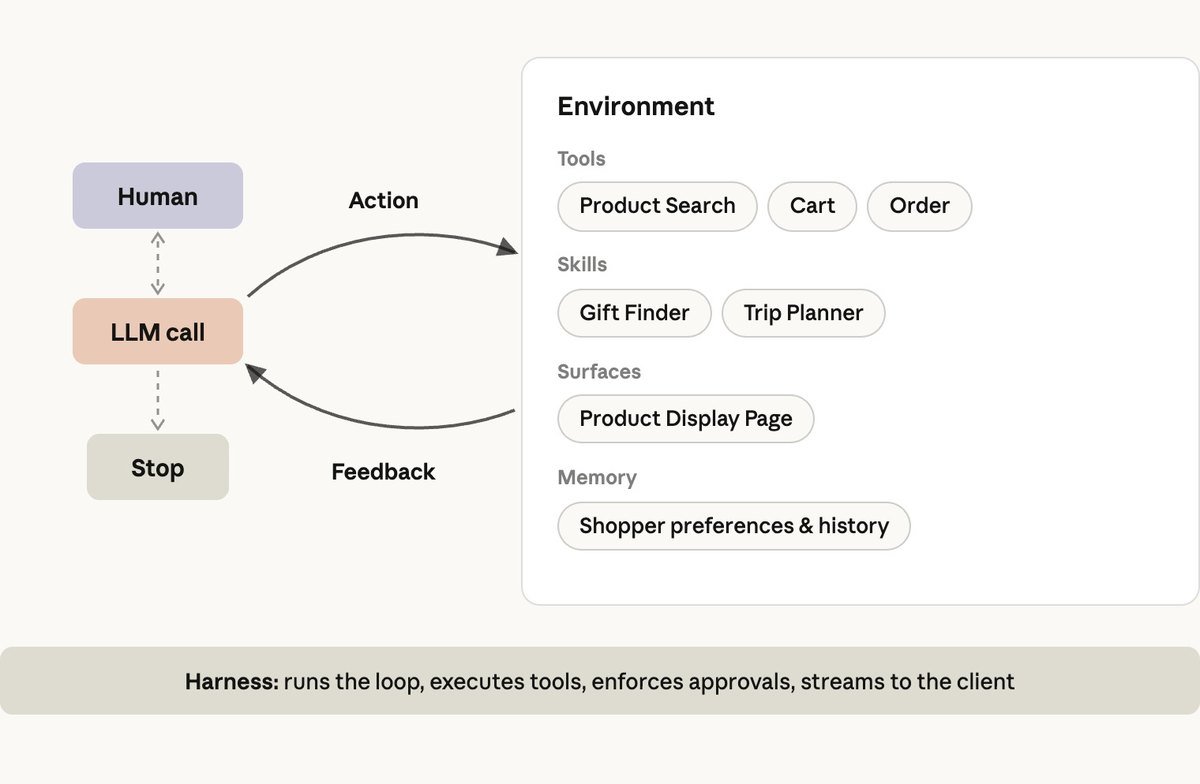
Anthropic says it spent the past year working with retailers, marketplaces, travel, entertainment and telecom teams on commerce agents now running in production, with enterprise customers reporting larger carts and more efficient seller operations. Those agents share one architecture: a single Claude in a standard agent loop equipped with skills, tools and a strong eval suite, rather than a set of domain-specific subagents. The guide runs in three parts. Part 1 covers architecture — skills instead of subagents, deciding between the system prompt and a skill by frequency of use, engineering agent tooling, and treating UI components as tools. Part 2 covers latency and cost, including perceived latency, prompt caching and model configuration. Part 3 covers production: memory that survives the session, safety enforced in the harness, evals for a non-deterministic system, and shipping inside a large organization. The repository ships harnesses, patterns and guardrails for retail, travel, telecom and ticketing.
What it means for independent store owners
Of today's AI items, this is the most directly useful — and the one with the highest bar, because it targets engineering teams, not merchants looking for an app to install. The value is in a few specific calls. "Skills, not subagents" contradicts the instinct most teams start with: splitting support, recommendation and returns into separate agents, then drowning in orchestration. "Safety enforcement lives in the harness" is the other one, and it means a rule like "never place an order above $X" written into a prompt doesn't count — it has to be enforced at the tool layer.
If you have no development resource, this doesn't apply to you today. If you have a technical partner or an agency, read Part 1 and the evals section before committing to a build. Most shopping-assistant projects fail on evals, not architecture: the thing works at launch, quietly degrades after a prompt revision, and nobody catches it. There's also a signal worth noting independent of whether you build anything — the model vendors are now shipping commerce reference implementations, which means the interface standards for agentic shopping are being defined right now by a handful of companies. Worth watching; not worth betting on yet.