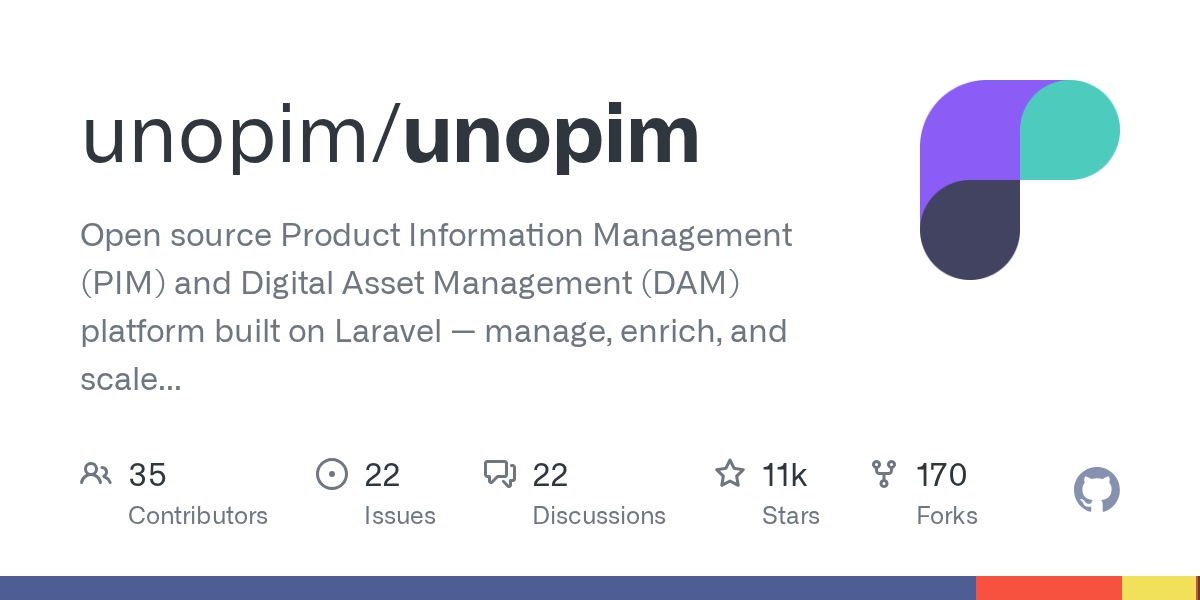
Upfront: I did not build this. It is an open-source project on GitHub (unopim/unopim, MIT). It is listed here on star count, maintenance activity and how well it fits day-to-day storefront operations.
What it does
- One source of product truth — attributes, variants, taxonomy, copy and imagery live together instead of being edited separately in WooCommerce, Amazon and Shopify.
- Multi-locale, multi-channel — the same product can carry different copy and attributes per language and per channel, which cross-border storefronts need.
- DAM included — assets are catalogued centrally, so swapping a hero image doesn't mean hunting the original across your drive.
- REST API — connect it to listing scripts and automation rather than exporting and importing CSVs by hand.
How to use it
Two routes. Docker is fastest; Composer suits you if you plan to modify the code:
# option 1: Docker (fastest)
curl -O https://raw.githubusercontent.com/unopim/unopim/master/compose.yaml
docker compose up -d
docker compose exec unopim cat storage/app/admin-credentials.txt

# option 2: Composer
composer create-project unopim/unopim
cd unopim
php artisan unopim:install
php artisan serve
With Docker, the command above prints the generated admin password. Requires PHP 8.2+ and a database.
When to use it, and when not to
Worth it once your SKU count grows and you sell across several channels. For stock and procurement see InvenTree; to simply clean up a Shopify catalogue, awesome-ecom-skills is lighter.