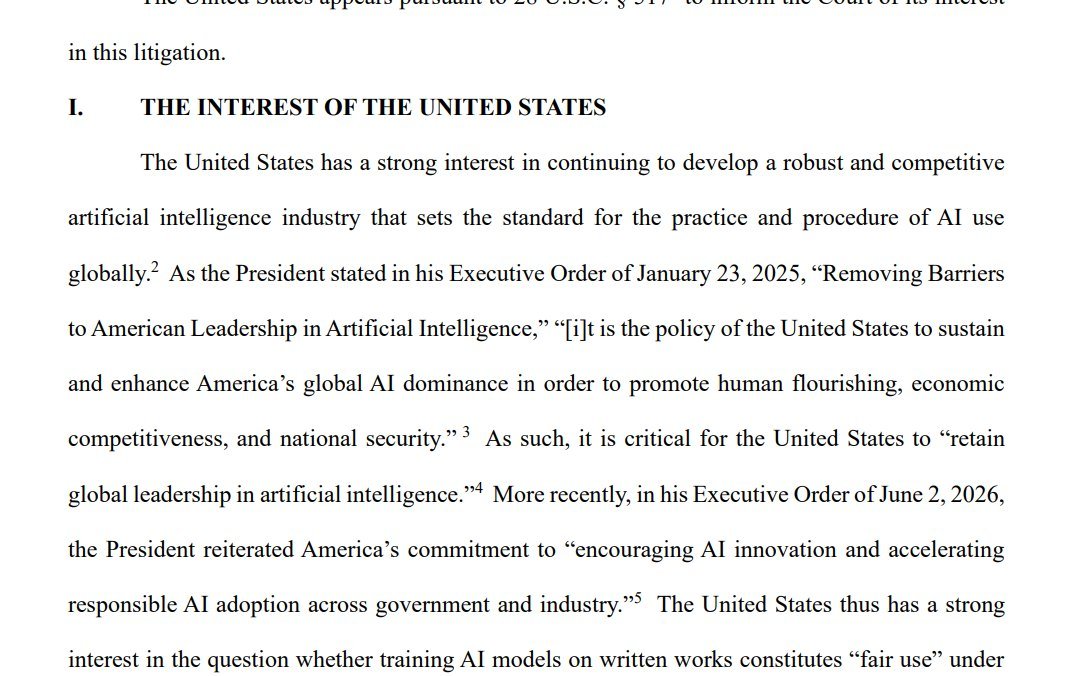
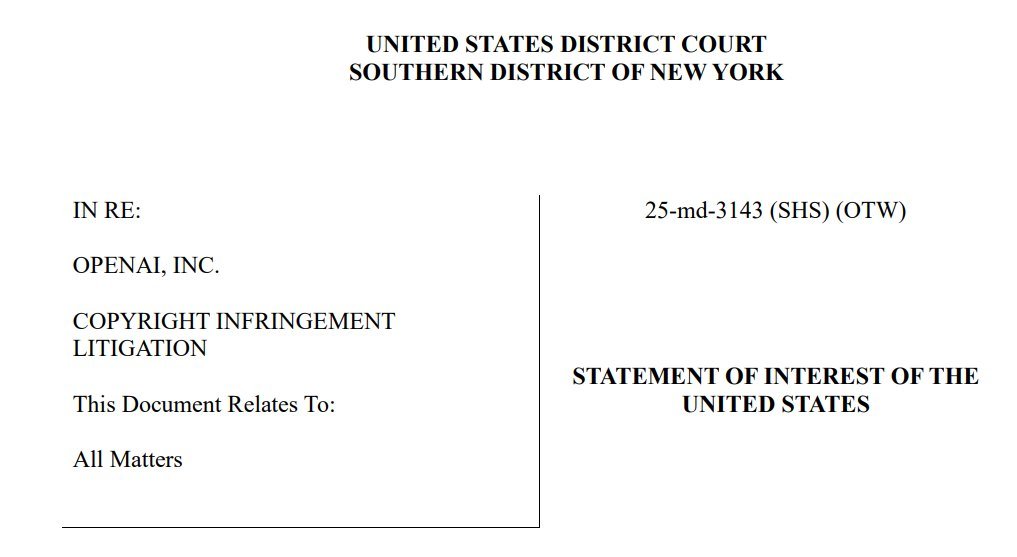
The U.S. Department of Justice filed a statement of interest with the Manhattan federal court on September 1, intervening in The New York Times' copyright case against OpenAI to support the position that training large language models constitutes fair use, according to Chinese tech outlet IT Home.
Key facts
- Timing: DOJ filing dated September 1. The judge has ordered summary judgment motions from both sides by September 4.
- Who it hits: Sites whose original content is a core asset, and teams producing content at scale with AI.
- What to do: Nothing yet — wait for the ruling. What is worth doing now is making your original content clearly attributed by author, date and entity.
What happened
The DOJ's filing argues primarily from national security and the competitiveness of the American AI industry, characterizing the use of copyrighted material in training as transformative and therefore fair use. A New York Times spokesperson criticized the government for siding with AI companies at the expense of creators. The judge has required both parties to file summary judgment motions no later than September 4. The outcome could set precedent for whether training on copyrighted material is lawful. Worth noting: a statement of interest is not binding, and there is no guarantee the court adopts the government's position.
What it means for independent store owners
Nothing to change in the short term, but the direction is worth tracking. If the court ultimately finds training to be fair use, then your product descriptions, original reviews and product photography being ingested into models leaves you with essentially no legal remedy — blocking AI crawlers shifts from one option among several to the only lever you have, which is why today's other item on robots.txt versus WAF enforcement pairs with this one. If the court sides with the Times instead, licensing and payment mechanisms may follow, but a small store's negotiating leverage in that world still rounds to zero.
Either way, the practical position of a small content site barely moves: your content is being used for training, and that is settled in practice if not in law. What actually improves your position is not the copyright ruling but making AI systems able to recognize the content as yours when they cite it — clear author attribution, publication dates, and organization and author entities in your structured data. That work pays off regardless of how the case lands. Don't spend attention following the docket; there will be several more rounds after September 4.


